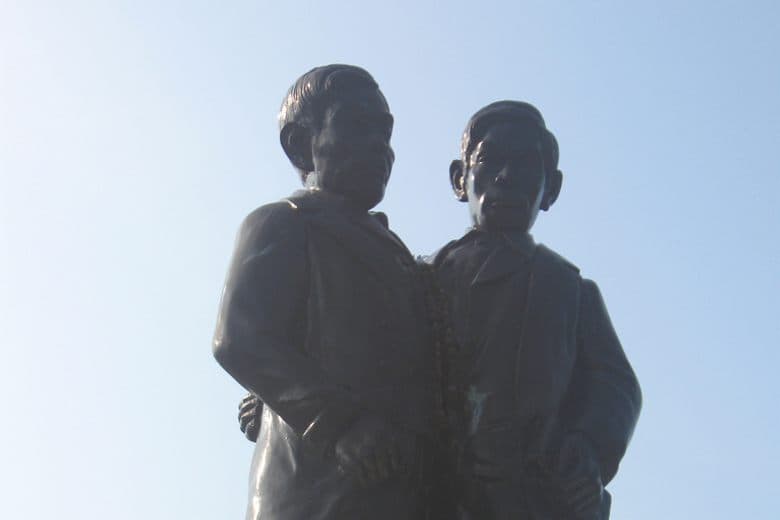
The Chang and Eng Memorial Statue pays tribute to Chang and Eng Bunker, the conjoined twins born in Samut Songkhram in 1811, who became known worldwide as the 'Siamese Twins.' Bound by cartilage at the chest, they achieved fame touring the United States and Europe as human wonders in the 19th century. Although largely unknown in their homeland until the 1980s, this bronze monument, erected in 2001, now stands as a sign of respect for their fascinating lives and extraordinary story.
Visitors consistently praise the statue's historical significance and the peaceful setting of the floral park where it is located. Many find the story of Chang and Eng compelling and appreciate the local effort to commemorate them. The statue itself is noted for its artistic quality and the unique material used for its casting—bronze from donated fishermen's broken propellers. Reviewers often highlight the opportunity to reflect on a unique piece of history.
To fully appreciate the site, visitors should allocate about 30 minutes to an hour. The best time to visit is during cooler parts of the day, such as early morning or late afternoon, to enjoy the park setting comfortably. There are no specific items to bring, but a camera is recommended for those wishing to capture the monument. The site is generally easy to navigate and suitable for all ages.
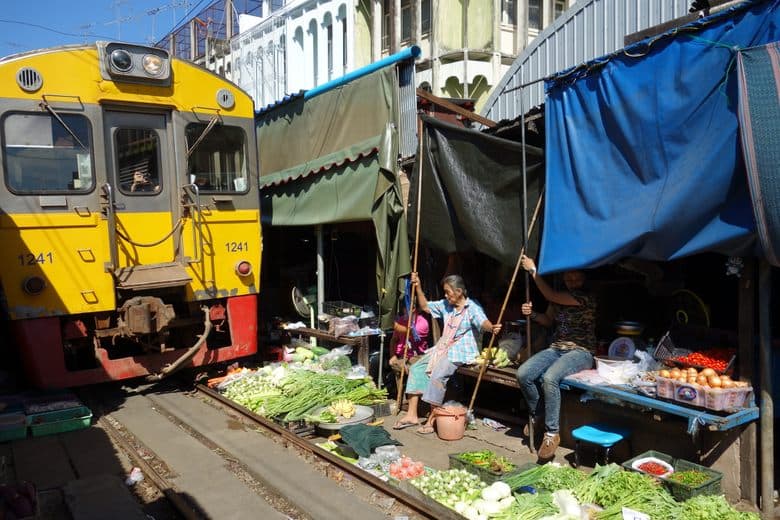
The statue is located in Samut Songkhram, often referred to as Mae Klong. Public transport options to Samut Songkhram typically involve vans or buses from Bangkok, which can be taken from Southern Bus Terminal (Sai Tai Mai) or Victory Monument. Once in Samut Songkhram, the statue is usually a short taxi or tuk-tuk ride from the main market area or the Mae Klong Railway Market. Walking from the central market might be an option for some, but it's advisable to confirm the exact distance locally.
Common complaints are rare, but some visitors might find the site less engaging if they are unfamiliar with the history of Chang and Eng. To mitigate this, it is recommended to read up on their story beforehand to fully appreciate the significance of the memorial.