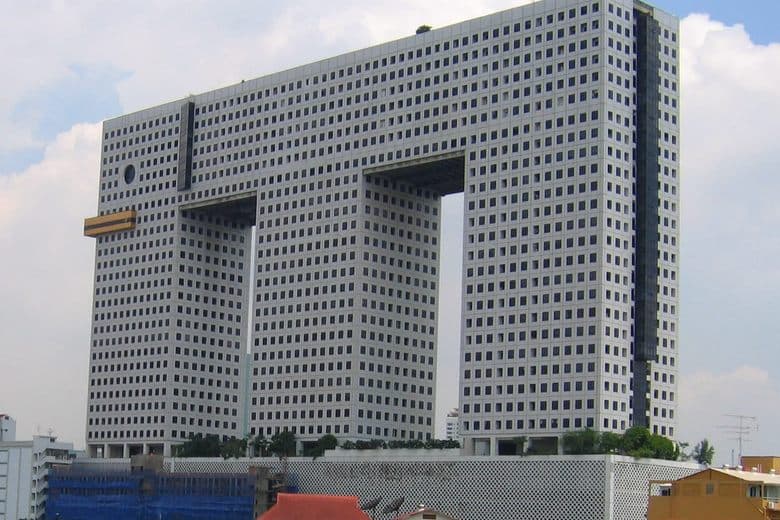
The Elephant Building, locally known as Chang Building, is an iconic high-rise in Bangkok that stands out due to its distinctive elephant shape. Conceived by engineer Arun Chaisaree and architect Ong-ard Satrabhandhu, this 32-story structure, completed in 1997, pays homage to the elephant's central role in Thai society. It features three towers forming the legs and trunk, with tusks housing offices, circular windows as eyes, multi-story balconies as ears, and a smoked-glass tail, making it the largest elephant-shaped structure globally.
Visitors often appreciate the building's quirky design and its status as an architectural oddity in a city of numerous skyscrapers. While some international critics have debated its aesthetic merit, many find its playful nature charming. It's not a place for extensive exploration, as it's primarily a functional office and residential complex, but its unique exterior makes it a popular subject for photography.
For those interested in viewing the building, a quick stop for photos is usually sufficient. There are no specific tours or public access to the interior for tourists. The best time to visit is during daylight hours for clear visibility. Consider combining a visit with other activities in the Chatuchak district, such as the famous Chatuchak Weekend Market, although the building is not directly adjacent to the market.
The Elephant Building is located in the Chatuchak District in the northern part of Bangkok. While it can be seen from various points, some of the best views are from the Vibhavadi Rangsit Expressway, particularly when arriving from Suvarnabhumi Airport. For public transport, the nearest BTS Skytrain station is Phahon Yothin, and the MRT Blue Line's Phahon Yothin station is also relatively close. From these stations, a short taxi or motorbike taxi ride would be necessary to get closer to the building for a good view. Driving is an option, but parking might be limited as it's a busy commercial area.
A common point of confusion is that the building is not a museum or a public attraction with an entrance fee; it's a private commercial and residential property. Visitors should manage expectations and understand that the experience is limited to viewing its exterior from public spaces. There are no specific complaints about the building itself from a tourist perspective, other than the general understanding that it's not designed for internal tourist access.